
Sales Tax Law: Reform or a New Burden?
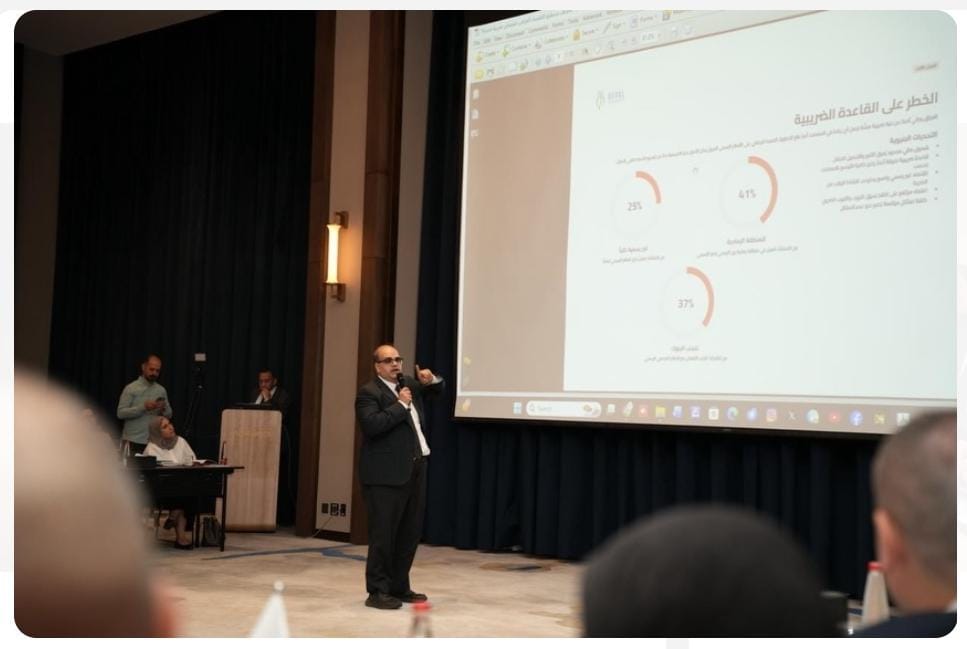
Mr. Khalid Al-Jabri, Chairman of Osoul Foundation for Economic Development and Sustainable Development, participated in a workshop hosted by the Iraqi Economic Council to discuss the draft Sales Tax Law prepared by Egyptian experts. The workshop was attended by representatives of Parliament, the private sector, the General Commission for Taxes, the German Embassy, and GIZ, which is funding the project.
The question is not whether Iraq needs to introduce a new tax, but whether this is the right time and the right approach.
Iraq needs a prolonged recovery period of at least ten years. Increasing the burden on the formal sector before reforming the broader tax, fees, levies, customs, and compliance framework could push more economic activity into the informal economy.
This would mean losing more than just tax revenues.It would also weaken the ability to measure economic activity, monitor markets, and manage prices and liquidity—ultimately placing both the Central Bank and the Ministry of Finance in a more difficult position to effectively manage the economy.
True reform should begin with:
Simplifying the burden → Harmonizing legislation → Digitalization → Combating tax evasion and smuggling → Expanding the formal economy → Gradual implementation of taxation.
A tax that appears to increase revenues on paper today, but ultimately narrows the tax base tomorrow, cannot be considered sustainable reform.
Iraq needs to broaden its tax base through genuine tax reform—not increase the burden on those who remain within it.