
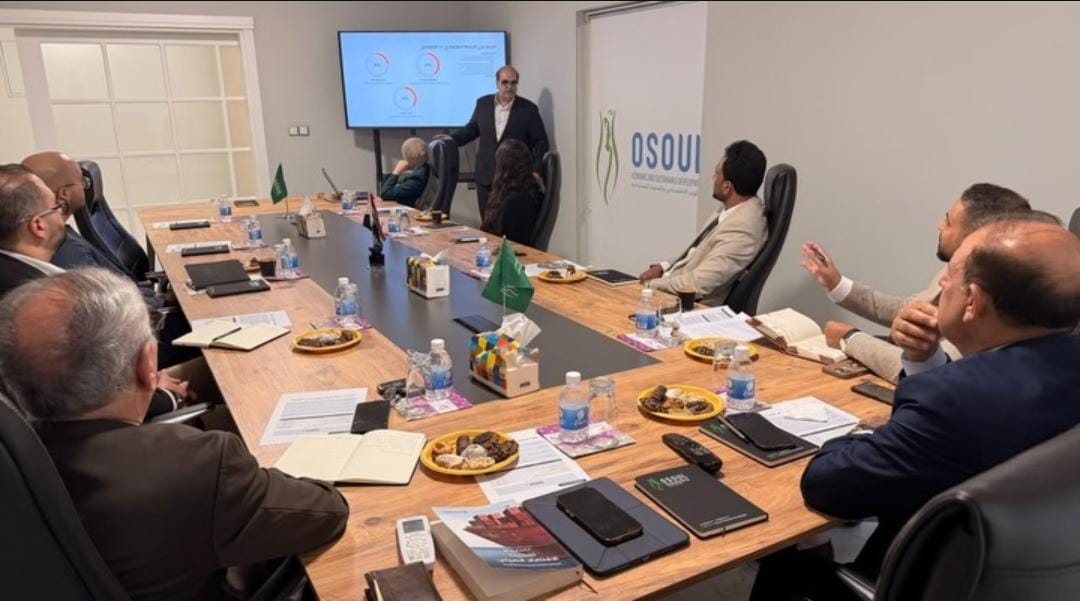
Osoul Concludes Preparatory Economic Sessions Ahead of Final Session
The Osoul Foundation for Economic and Sustainable Development held its fourth and final economic session in the preparatory series, with the participation of leading economic experts and analysts, representatives of international organizations and institutions, and relevant stakeholders. The session paved the way for the concluding session, which will consolidate the outcomes of this process into a package of recommendations and policy perspectives directed at relevant authorities and decision-makers.
The session focused on several strategic issues that represent key pillars for rebuilding the Iraqi economy, foremost among them attracting long-term foreign direct investment (FDI), not merely as a source of financing, but as a means of transferring knowledge, expertise, and technology and building capacity, thereby strengthening its contribution to the Iraqi economy and generating sustainable added value.
Discussions also addressed the importance of drawing on specialized expertise in decision-making across various sectors, including economic and administrative fields, given the need to improve the quality of government decisions through more rigorous study, analysis, and specialized assessment before their adoption and implementation.
The session further explored launching a reform initiative led by the new generation of young people, enabling young talent and professionals to participate in shaping the future of the economy and public administration, and shifting from short-term crisis management towards a long-term reform vision.
Another key topic was the need to engage specialized entities with extensive expertise and relevant international experience to develop comprehensive sectoral perspectives and plans, drawing on practices in other countries, and to formulate sector-specific economic strategies. Economic policymaking requires an in-depth understanding of individual sectors, as well as the characteristics, challenges, and opportunities of the Iraqi economy.
The session also emphasized the importance of enhancing human capital efficiency and undertaking structural reform of the public administration system, recognizing that Iraq possesses substantial resources and potential, while its fundamental challenge lies in managing these resources efficiently and transforming them into tangible economic and developmental value.