
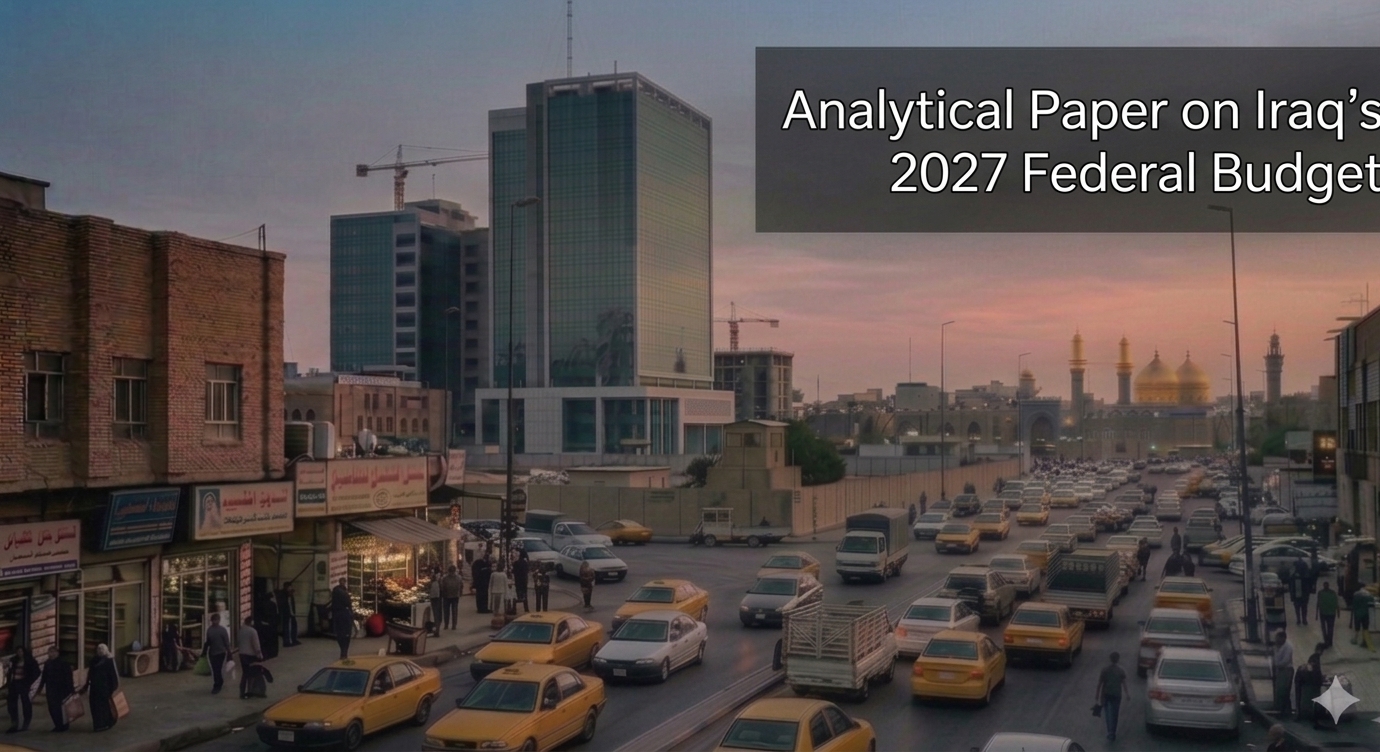
Osoul Issues Analytical Paper on Iraq’s 2027 Federal Budget
Baghdad, October 2026 — Osoul for Economic and Sustainable Development (OESD) has published an analytical paper titled “Iraq’s 2027 Federal Budget: Tax and Revenue Provisions – A Critical Assessment,” prepared by a team of experts to examine the proposed budget’s fiscal and tax policies and assess their potential implications for the Iraqi economy, the private sector, and the investment climate.
The paper reviews the budget’s key fiscal indicators, proposed tax and revenue measures, risks associated with oil dependency and deficit financing, and the alignment of the proposed budget with recommendations from the International Monetary Fund and the U.S. Department of State’s 2026 Investment Climate Statement on Iraq.
The study highlights the need for structural reforms to strengthen fiscal sustainability, improve public spending efficiency, ensure greater regulatory stability, and expand Iraq’s productive economic base, rather than relying primarily on increased taxes and fees.
This publication forms part of OESD’s ongoing efforts to support evidence-based economic debate and contribute practical policy recommendations to advance economic reform in Iraq.
Read the full paper: Iraq’s 2027 Federal Budget: Tax and Revenue Provisions – A Critical Assessment.
Press Here IFB EN