
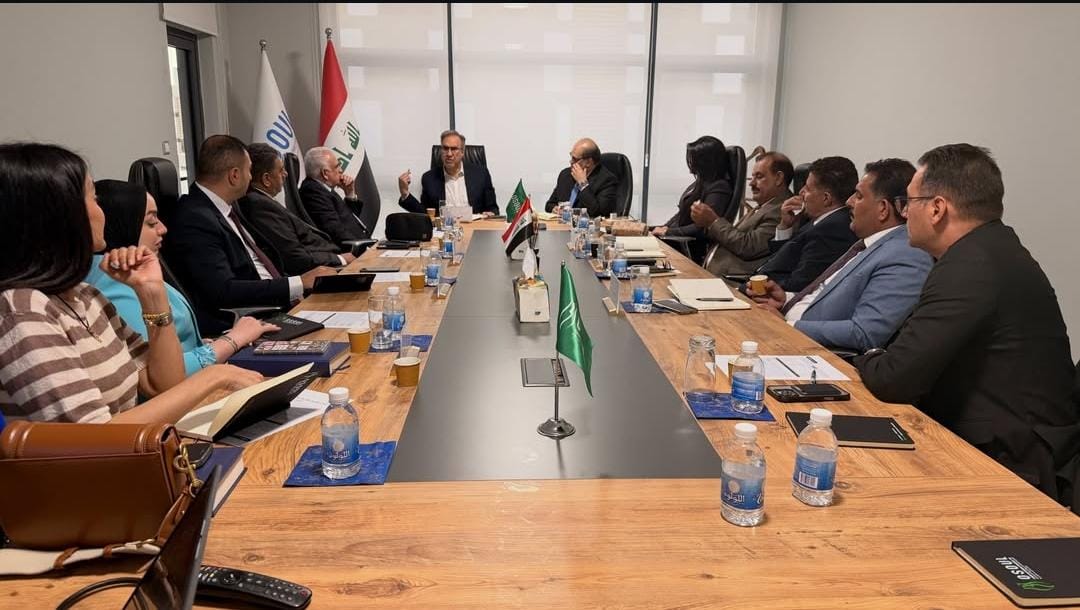
Osoul Holds Third Multi-Stakeholder Economic Dialogue Session
The Osoul Foundation for Economic and Sustainable Development held the third session in its multi-stakeholder economic dialogue series, bringing together a distinguished group of specialists, experts, and representatives of the public and private sectors to discuss key issues related to the future of the Iraqi economy, government spending efficiency, and the quality of public services.
The session featured economic discussions and presentations addressing the relationship between the quality of public services and citizens’ confidence in the economy, the importance of reassessing service delivery mechanisms, and the role of the private sector in service provision. Discussions also covered human capital, vocational education, youth empowerment, and the use of artificial intelligence to create new opportunities and businesses.
Participants also discussed the importance of restructuring certain state-owned enterprises, particularly those operating in the electricity sector, and developing new models for citizen and private-sector participation in the ownership and operation of selected service activities. They further emphasized the need to account for full operating costs when planning government expenditure, rather than limiting calculations to salaries.
The session also addressed the need to improve government operations by preserving institutional memory and ensuring continuity of progress across successive administrations. Participants highlighted the importance of establishing a more effective economic decision-making framework based on evaluating alternatives and scenarios and assessing economic impacts before decisions are made.
The session emphasized that economic reform is not limited to increasing expenditure, changing revenue sources, or maximizing revenues through taxes and fees. Rather, it requires redesigning how the state operates and delivers services, transforming its relationship with the private sector and citizens from one of service recipients to a partnership based on production, implementation, and ownership.